





Your Florida home’s exterior paint is literally your first line of defense in a high-stakes war against the elements. Between that brutal mid-day UV index, the air so thick with humidity you can almost wear it. And the corrosive salt spray drifting off the coast, a "standard" paint job is going to get chewed up and spit out in under three years. If you actually want to protect your investment, you’ve got to stop obsessing over color swatches for a second and start looking at the chemical guts of the can. To keep your walls from chalking or peeling off in sheets, you need to prioritize UV-resistant exterior paint that’s built specifically for the local trenches.
Key Takeaways
- Lock in High-Quality Resins: Grab 100% acrylic resins to ensure your finish stays flexible even when the thermometer redlines. That elasticity is what stops the spider-web cracking you see with those cheap, brittle vinyl blends.
- Insist on Inorganic Pigments: Bet on mineral-based pigments because they sit stable under intense sunlight, while organic dyes just give up. This is the secret to making sure your house stays "Coastal Blue" for years instead of months.
- Spring for Premium Buckets: Pick specialized coatings like Sherwin-Williams Duration or Emerald to get a much beefier protective barrier. These are engineered to survive the unique, wet-and-hot rigors of the Florida landscape.
- Nail the Professional Prep: Scrub every inch and seal the substrate to make sure those UV-blocking layers actually bite into the wall. If you skip the prep, even the most expensive gallon on the planet will fail before the season is out.
Why UV Resistance in Exterior Paint Is Non-Negotiable in Florida
Most of the stuff you find on the "bargain" shelf is loaded with cheap vinyl fillers that turn bone-dry and brittle the moment the sun starts hammering down. In our corner of the state, that lack of quality leads to three specific, expensive headaches:
Chalking Out: High UV rays shred the paint’s binder until your finish turns into a powdery, white mess that washes away in a thunderstorm, leaving your bare stucco exposed.
The Great Fade: Intense sunlight basically nukes organic pigments, leaving a once-vibrant home looking bleached-out and patchy before you’ve even finished the landscaping.
Total Delamination: Florida heat makes stucco expand and contract like it’s breathing. If your UV-resistant exterior paint lacks the "stretch" to move with the house, it’s going to snap, lose its bond, and peel.
Key Features to Look For in the Best UV-Resistant Exterior Paint
When you're hunting for the right gear for a Florida home, ignore the marketing fluff and hunt for these three technical "must-haves":
100% Acrylic Resin
Forget the "blends." You want the 100% stuff. It stays rubbery for the long haul, which lets the paint film stretch during that brutal daily cycle of 90°F heat followed by a snap-cooling afternoon downpour.
Inorganic Pigments
Stick to mineral-based pigments. They don’t have the same chemical reaction to UV light as synthetic dyes. It’s the difference between a house that looks fresh for a decade and one that looks like it’s been sitting in a bleach bath after two years.
High Solids Content
Check the "volume solids" on the data sheet. More solids mean more actual armor stays on your wall once the water evaporates out of the paint. A thick, heavy film is the only way to physically block UV rays from reaching the structural stucco underneath.
A& B Painting’s Top Product Recommendations
I’ve watched plenty of "miracle" paints fail in the humidity, but these three are the heavy hitters that actually survive:
- Sherwin-Williams Duration®: This is the gold standard for Port Charlotte crews because of the Permalast® tech. It goes on nearly twice as thick as the cheap stuff, creating a massive, flexible shield.
- Sherwin-Williams Emerald® Rain Refresh: This is the move if you’re tired of pressure washing. It uses UV-resistant exterior paint polymer tech that actually sheds dirt when it rains, so the sun doesn't "bake" grime into your finish.
- Benjamin Moore Aura® Waterborne Exterior: Their Color Lock® technology bonds the pigment to the resin at a molecular level. If you’re painting your house a dark or bold shade, this is the only way to fight the inevitable sun-bleaching.
The Role of Exterior Paint Color Selection
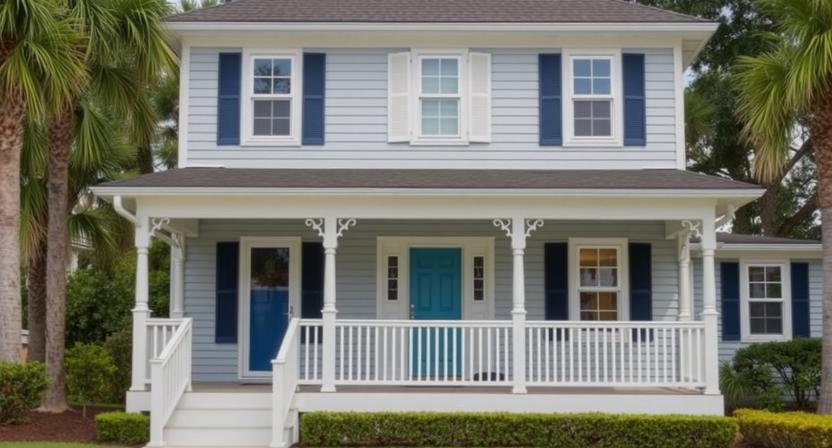
You can’t argue with physics. Light colors—your whites, creams, and light tans—bounce the majority of those UV rays away and keep your home’s "skin" cooler. Dark colors soak up that thermal energy, which can jack up your wall temperature by 30°F or more. That kind of heat stress will cook the life right out of your paint. If you’re dead set on a dark look, make sure you’re asking for a "Cool Hull" or "Heat Reflective" variant to mitigate the damage.
Proper Exterior Paint Application: The Florida Standard
Even the best paint is a waste of money if the application is lazy. Down here, doing it right means hitting these marks:
- Kill the Salt: You need a high-pressure wash to blast away salt deposits and old "chalk" oxidation before the first drop of paint hits the wall.
- Seal the Masonry: Use a heavy-duty sealer like Loxon® to balance the pH of the stucco. If you don't, the high alkalinity will literally "burn" your new paint from the inside out.
- Watch the Mils: You have to hit the manufacturer’s thickness specs. If a contractor thins the paint to make it spray easier, you’re getting zero UV protection.
Conclusion
At the end of the day, spending the extra cash on UV-resistant exterior paint is just smart math. Sure, those premium 100% acrylic cans cost more at the counter today, but they’ll stretch your repaint cycle out by an extra five or seven years. That’s thousands of dollars in labor costs you won't have to pay twice.
For homeowners in Port Charlotte and the surrounding areas, A&B Painting knows exactly how to handle these high-performance coatings. We don't do "quick and cheap" because we know the Florida sun doesn't show any mercy to a rush job.
Contact A&B Painting at 941-206-5423 for a free quote on your next project and secure the UV-resistant exterior paint your home needs to survive.
Frequently Asked Questions
How long does exterior paint typically last in Florida?
If you go with the cheap stuff, you’re looking at a 3 to 5-year window. If you use a high-end UV-resistant setup and have a crew that actually preps the surface, you can easily push that to 8 or 10 years.
Does a glossy finish resist UV rays better than a flat finish?
Generally, yes. Satin and semi-gloss finishes have a higher resin count. That smoother surface makes it way harder for salt and dirt to hitch a ride, which prevents the sun from grinding that grit into your walls.
Can I paint my Florida home during the rainy season?
You can, but it’s all about the timing. You need at least a 2 to 4-hour dry window before the clouds break. We track the humidity levels like hawks because if the air is too wet, the paint film won't cure and bond to the stucco.
Is elastomeric paint better than 100% acrylic for sun protection?
Elastomerics are king for waterproofing and hiding big cracks, but they don’t "breathe" well. For most local homes, a premium 100% acrylic is the better call because it balances UV defense with the breathability needed to keep moisture from getting trapped in your walls.